
Not Just a Northern Problem: Why Florida Homes Still Suffer Winter Pipe Damage
In short, the cold doesn’t create the problem—it exposes it.
Most homeowners in Florida don’t give winter plumbing issues a second thought. After all, we live in a place where snow is something you see on holiday postcards, not in your driveway. But every year, without fail, thousands of Florida homes experience leaks, bursts, and major plumbing failures as soon as the first cold front of the season rolls in.
It surprises people because the failures feel sudden, unexpected, and out of character for a “warm weather state.” But the real story is more complicated. Florida homes weren’t built with cold weather in mind—yet they still experience rapid temperature drops, attic exposure, and aging plumbing systems that can’t handle the seasonal shifts that winter brings.
This combination makes winter one of the most dangerous times of the year for homes with older pipes, even though the cold spells are short.
This isn’t just a northern problem. It’s a Florida problem too—just one we rarely talk about.
The Myth of “Warm Climate Immunity”
The most persistent misconception among Florida homeowners is the belief that cold-weather pipe damage only happens in places that freeze regularly. The thinking goes: if the ground never freezes here, and if you don’t wake up to icicles hanging off your roof, your pipes must be safe.
That false sense of security is exactly why so many Florida homeowners are caught off guard each year.
In states accustomed to harsh winters, builders expect freezing temperatures. Walls are reinforced, attics are structured to retain heat, and pipes are insulated or routed away from cold exposure. Those homes may experience far lower temperatures, but the infrastructure is designed to handle it.
Florida homes? Not even close.
Here, the design philosophy has always been about coping with heat and humidity—not cold. The issue isn’t how cold it gets, but how unprotected plumbing systems are when temperatures change quickly. Even a dip into the mid-30s for a few hours can create enough thermal stress to crack or weaken older pipes, especially CPVC, copper, and polybutylene systems that are already at the end of their lifespan.
A northern home might endure a week of freezing temperatures without a problem. A Florida home might experience a single cold night and wake up to a kitchen leak.
Does It Need to Drop Below 32°F for Plumbing Damage in Florida?
The short answer? No.
In Florida, plumbing damage often begins well above freezing temperatures. Because homes here were never designed to protect pipes from cold air exposure, stress and contraction can occur long before ice ever forms.
Risk often begins around 36–38°F, especially when wind, ventilation, or uninsulated spaces allow cold air to reach exposed plumbing. Pipes don’t need ice inside them to fail—they only need stress. For aging systems, contraction alone is enough.
This is why Florida sees plumbing failures during “cold snaps” that don’t technically qualify as freezes.
How Cold Snaps Affect Slab Plumbing in Florida
Many Florida homeowners assume that pipes beneath a concrete slab are completely protected from cold weather. Compared to attic or exterior-wall plumbing, slab lines are more insulated—but they are not immune to cold-related stress, especially in older homes.
In Florida, slab pipes rarely fail because of freezing - They fail because of stress created by temperature differences and movement.
The real issue with slab plumbing during cold snaps isn’t freezing—it’s differential temperature stress. A home’s plumbing system runs through multiple environments at once, including stable, temperature-regulated areas beneath the slab and more exposed spaces like attics, garages, and exterior walls that cool rapidly during a cold front. As temperatures drop overnight, exposed sections of pipe contract quickly while slab-embedded sections remain relatively warm. This uneven cooling causes different parts of the same pipe run to expand and contract at different rates, creating concentrated stress at joints, elbows, couplings, and transition points where pipes enter or exit the slab. In many cases, these stressed areas are located beneath the concrete, even though cold air never directly reaches them.
Why Florida Homes Are More Vulnerable Than People Think
The risk isn’t obvious because the conditions look harmless. But Florida has several hidden factors that make winter plumbing failures far more likely than most homeowners realize.
Uninsulated or Poorly Insulated Attics
In many Florida homes—especially those built before 2010—attics received minimal insulation because the priority was keeping heat out, not keeping cold away from pipes. When a cold front blows through, attic temperatures drop quickly, often matching outdoor air.
Any pipes running through those spaces are exposed to rapid cooling. CPVC becomes brittle, copper contracts, and PVC fittings can weaken. This is how a “harmless” six-hour cold spell turns into a leak the next day.
Older Construction That Never Considered Freezing
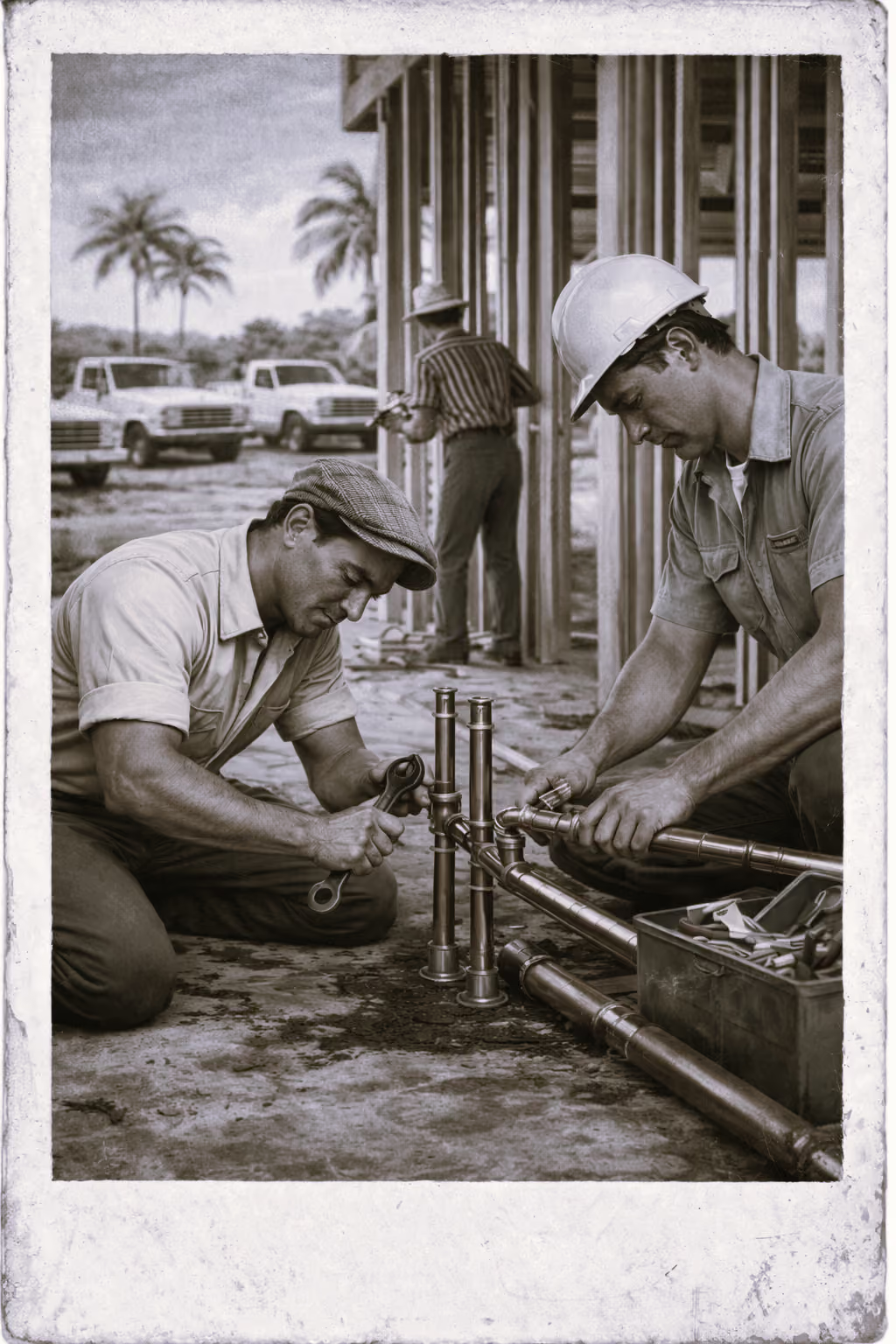
Florida builders traditionally placed pipes where they were easiest to access, not where they were protected. This includes exterior walls, just beneath the roofline, crawlspaces, uninsulated garage ceilings, and fully exposed attics.
Because cold weather was rare, the risks weren’t part of the design conversation. Materials and layouts that would be unacceptable in colder states became standard here.
High Mineral Content and Internal Pipe Wear
Florida’s hard water accelerates internal wear. Over decades, mineral buildup inside copper, CPVC, and polybutylene systems thins pipe walls and creates stress points. When temperatures drop and pipes contract, those weakened areas are often the first to fail.
This is why winter plumbing problems feel sudden—the damage has been forming for years. The cold front simply triggers the failure.
The 20–40-Year-Old Home Danger Zone
Homes built from the mid-1980s through the early 2000s represent the highest-risk category for winter plumbing failures. This era relied heavily on CPVC, copper, PVC, and polybutylene—materials that age poorly in Florida’s environment.
What’s important to understand is that most Florida pipe failures are caused by stress, not ice. Aging materials become far more sensitive to temperature swings over time.
Why These Homes Fail Early in the Season
- Thermal Shock
Pipes expand and contract as temperatures drop. For aging systems already weakened internally, one rapid shift can be enough to cause cracking. - Material Degradation
CPVC becomes brittle after decades of chemical exposure and heat cycles. Copper thins due to corrosion. Polybutylene degrades chemically. Cold weather removes the last margin of tolerance. - Existing Micro-Fractures
Most older systems already contain hairline cracks. A cold snap widens them, and leaks appear days later. - Rapid Temperature Swings
Florida cold fronts can drop temperatures 20–25 degrees in hours. Older pipes aren’t built to handle that contraction. - Environmental Conditions Inside the Home
Reduced water flow overnight allows water to cool faster, increasing pressure and stress at joints.
The Cost of Waiting for Failure
Winter plumbing failures in Florida are rarely minor. They often result in flooded walls, damaged flooring, soaked insulation, mold growth, slab leaks, and extensive drywall and cabinet replacement.
Insurance companies are increasingly limiting coverage for long-term pipe failure, particularly with CPVC, polybutylene, and aging copper. Many homeowners discover too late that repairs aren’t fully covered.
What could have been a planned repipe becomes an emergency rebuild.
Why Proactive Repiping Is the Smartest Long-Term Protection
Proactive repiping isn’t just about avoiding leaks—it’s about replacing a system that was never meant to last this long.
Modern PEX piping absorbs temperature changes, resists mineral buildup, and doesn’t become brittle with age. It expands and contracts naturally, even during rare freezes, without cracking.
A professional whole-home repipe also allows vulnerable lines to be rerouted away from attics and exterior walls, reducing exposure and future risk.
Instead of repairing the same system repeatedly, a repipe eliminates the root cause entirely.
How to Know If Your Home Is at Risk
Florida homes can experience winter pipe damage without ever reaching freezing temperatures. Your risk is higher if your home:
- Was built between 1985 and 2005
- Uses CPVC, copper, polybutylene, or old PVC
- Has low water pressure, discolored water, or recurring leaks
- Has plumbing routed through attics or exterior walls
- Has experienced pinhole leaks or patchwork repairs
- Has never had a full-system plumbing inspection
Even if everything appears normal, older plumbing can fail from a single cold morning.

A Smarter Way to Prepare for Winter
Florida will never experience the deep freezes of northern states, but that doesn’t mean our homes are safe from winter pipe damage. In many ways, the danger is greater because our homes were never constructed with cold protection in mind. When those first cold fronts arrive, older plumbing systems—already weakened by mineral buildup and decades of wear—often can’t withstand the sudden temperature change.
Proactive repiping gives homeowners the chance to get ahead of the problem instead of reacting to a disaster after it happens. And in a state where winter weather is unpredictable, that kind of protection is more valuable than ever.
If you want to understand the true condition of your home’s plumbing—or prevent a winter leak before it starts—schedule a free in-home evaluation with your trusted, local repiping company: RePipe Experts. A FREE inspection and related estimate can provide a professional evaluation of your existing pipes, identify hidden risks related to age, materials, and layout, and explain whether proactive repiping makes sense for your home. We’ll provide clear recommendations and a straightforward estimate—no pressure, no guesswork—so you can make an informed decision with confidence. Learn more and schedule your free inspection at www.repipe.pro or simply call us locally at (888)973-7473. In many cases, we’re able to provide same-day inspections.
Schedule your FREE Consultation
Repipe Experts can help assess what needs replacing, provide quality materials, and complete your project in a timely manner with minimal disruption.
